The book · Wiley 2024
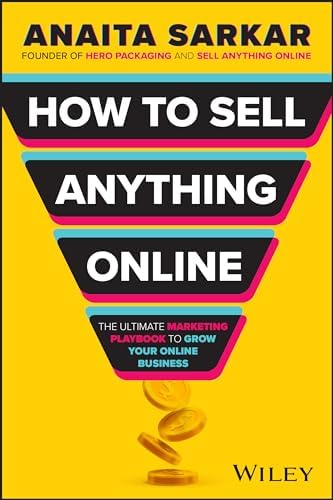
The Ultimate Marketing Playbook to Grow Your Online Business. Written by Anaita Sarkar, co-founder of Hero Packaging.
4.8 out of 5 on Amazon
What’s inside
Five parts that take you from foundations to a full marketing engine. Flip to the section you need and put it to work.
The 5 core pillars
The foundations of selling online, covered one pillar at a time. This is the base the rest of the book builds on.
The marketing funnel
Top of funnel to bottom of funnel (TOFU, MOFU, BOFU). How a stranger becomes a customer, and what to run at each stage.
The secret sauce of retention
Getting the customers you already have to come back and buy again, instead of paying to acquire new ones every time.
The magic bucket of loyalty
Turning repeat customers into loyal fans who keep choosing your brand and bring their friends with them.
What's next
Where selling online is heading, so the playbook keeps working after the last page.
Named frameworks
The book runs on frameworks you can lift straight out, like the BE SEEN framework and the rule of 1000.
Chapter by chapter
Chapters
Introduction
Anaita tells the story of quitting her accounting career at a big-four firm after being berated by a manager, then building two e-commerce businesses: a personalised leather accessories brand and Hero Packaging, Australia's go-to sustainable packaging company with over 65,000 business customers. The through-line: the same digital marketing strategies work for selling anything online if you know which lever to pull at the right time.
My seven business beliefs
Anaita's seven operating beliefs from ten years in business and mentoring hundreds of brands: be everywhere cheaply, believe there are no magic spells behind big brands, stop working for every sale, build genuine relationships, stop caring what people think, keep a brag book, and be delusionally confident. She also warns that starting a business is easy; consistent post-launch sales are the hard part.
Craft a distinct competitive advantage
Product features are not a competitive advantage because any product can be copied and matched on price. The durable advantage is brand uniqueness and recognisability: colours, personality, customer experience, packaging and founder profile that make customers choose you even when a competitor sells the same thing.
Master your cashflow
A wake-up-call meeting where Anaita couldn't answer 'what's your cash runway?' taught her that revenue growth without cash discipline keeps a business in a loan cycle. The chapter gives a daily cash-setting routine, margin benchmarks, supplier term negotiation, and the CPA-vs-AOV rule for judging ad spend.
The power of protectable IP
Copycats are inevitable for any successful product, so build something in the business that competitors can't take. The Oodie answered copycats with licensing deals (Warner Bros, Disney, Pokemon); Hero Packaging built short-run custom printing that was expensive and hard to replicate. Protectable IP also raises business valuation.
Build your digital assets
Digital assets are the audience data your business owns: email lists, SMS subscribers, social followers, push subscribers, Facebook group members and app users. Marketing to them is cheap and high-return, and deliberately growing them should be a constant priority.
Consistency will win the game
Consistency is the fifth pillar: Anaita posted on Instagram for a full year before one video hit 200,000 views and added 2,000 followers, and the mistake most people make is stopping after a win. Includes the 'rule of 1000' and an introduction to the marketing funnel (TOFU/MOFU/BOFU) via her own 8-touchpoint journey to buying red exercise tights.
TOFU strategy #1: Facebook (Meta) ads
Meta ads are Anaita's first-choice TOFU lever because they build brand awareness while you sleep and win 'brain space' in consumers' minds. The chapter covers the three-level ad account structure, why to always pick the conversions objective, budget rules of thumb, and how to set up her two evergreen awareness campaigns: interest-based targeting and Advantage+ campaigns, plus what TOFU ad creative and copy should look like.
TOFU strategy #2: Influencer marketing
Traditional hold-product-and-smile influencer marketing is dead, but seven modern influencer strategies still build serious awareness: co-creation, influencer-named collections, expert/authority creators, guerrilla stunts, giveaways, experiential events and whitelisting. Includes rate cards by follower tier, add-on fees to expect, and four ways to find influencers.
TOFU strategy #3: Digital PR
Digital PR made Hero Packaging a category leader (hundreds of publications, SBS, Channel 7). The chapter covers DIY PR via Linkby's cost-per-click model, HARO for journalist requests, when a PR agency is worth $2,000-$20,000/month, using awards as newsworthy credibility, and a Q&A with tbh Skincare's Rachael Wilde on viral brand awareness.
TOFU strategy #4: Brand collaborations
Brand collaborations let two brands swap audiences, create buzz that ordinary launches can't, and transfer trust ('like a friend vouching for someone new'). Covers four collaboration types - product co-creation, not-for-profit, sponsorship and cross-promotion bundles - plus a Q&A with Collabosaurus founder Jess Ruhfus on picking the right collab for your goal.
TOFU strategy #5: TikTok
TikTok is a broadcast platform, not a social network - every video reaches people who don't follow you, which makes it a brand-awareness machine. Anaita shares how she grew her own audience posting 3-4 videos a day, how to escape '200-view jail', her BE SEEN content framework, B-roll habits, and a Q&A with Fayt The Label founder Brittney Saunders.
TOFU strategy #6: TikTok ads
TikTok's paid platform is built for brand awareness, and the standout TOFU play is paying for followers: thousands of targeted followers for under $100, which compounds engagement and unlocks features like the bio link. Walks through the community-interaction campaign setup: objective, budget, audience, optimisation goal and creative selection.
TOFU strategy #7: Instagram
Instagram built Hero Packaging's 99,000-strong community, but its historic weakness is discoverability - it's now shifting toward TikTok-style reach for new audiences. Rather than teach reel mechanics that date quickly, Anaita gives evergreen principles: follow Instagram experts, ride trends authentically, and make genuinely engaging content across four proven pillars.
MOFU strategy #1: Meta ads
When Anaita impulsively switched off Hero's Meta ads to save $30,000/month, site traffic halved within 24 hours - Meta ads are the most consistent traffic stream a store has. The MOFU play is a single manual conversions campaign aimed at people who know you but haven't added to cart, with warm-audience creative like founder videos and reviews.
MOFU strategy #2: Email marketing
Email drives up to 30% of daily traffic for major e-commerce companies at an average 36x ROI. The chapter is a two-part system: growing the list (popups, story promos, always-on giveaways, brand collabs, lead magnets) and monetising it (welcome series, browse abandonment flows, segmented campaigns and a newsletter).
MOFU strategy #3: Google Ads
Google Ads captures buyers at the moment of intent - the difference from Meta is that searchers are actively solving a problem, so conversion runs higher. Anaita prescribes three always-on campaign types: branded search, keyword-focused search, and Performance Max, breaking each down into keywords, headlines, descriptions and sitelinks.
MOFU strategy #4: SEO
Organic search takes 73% of clicks versus 27% for ads, making SEO the highest-leverage free channel. The chapter covers Google's confirmed ranking factors - relevant content (matched to the four search intents), site UX, on-page SEO and backlinks - plus Anaita's CURE writing method and four realistic backlink strategies.
MOFU strategy #5: Instagram
For driving website traffic, Instagram stories beat everything - a single story with a link out-drove an email to 5,000 subscribers for Anaita's masterclass sign-ups. Posts and reels are for awareness; stories are for clicks. Includes a Q&A with James Reu, former head of e-commerce at LSKD.
BOFU strategy #1: Website optimisation
Conversion rate optimisation is the highest-ROI work in the funnel: one mentoring client tripled revenue in weeks with zero extra ad spend by fixing site speed, images and copy (1% to 3.2% conversion). The chapter is a page-by-page CRO checklist covering homepage, product pages, collections pages and cart.
BOFU strategy #2: Email marketing
At the bottom of the funnel, email's job is nudging people who already added to cart. A two-email abandoned-cart flow with dynamic product content sells in the background with zero daily work - and Anaita advises against including discount codes, which train shoppers to abandon on purpose.
BOFU strategy #3: TikTok Shop
TikTok Shop removes the app-exit friction that kills impulse purchases - viewers buy tagged products in a few taps without leaving TikTok. Covers the seller setup process end to end, plus a Q&A with Thankyou co-founder Daniel Flynn on purpose-driven community and customer loyalty.
Retention strategy #1: How to create an exceptional customer experience
Customer experience is a marketing function, not an operational one - service quality, dispatch speed and returns policy drive repeat purchase more than any ad. Reframe every touchpoint as marketing: audit them one week at a time, ship fast, and treat a generous returns policy as a retention weapon.
Retention strategy #2: How to use email marketing to bring customers back
The personal thank-you messages Anaita sent every eBay buyer (95% response rate, an eBay homepage feature) are now automatable: post-purchase flows (thank-you, instructions, reviews, replenishment, back-in-stock) plus weekly campaigns (cross-sells, product hacks, staff picks, gift incentives) that bring customers back without constant selling.
Retention strategy #3: How to use Meta ads to retarget your customers
In every client ad account she analyses, the customer-retargeting campaign has the highest ROAS. The recipe: target buyers from the last 180 days who haven't bought in 30, at ~$10/day, with dynamic collections ads and copy that admits they know you ('We miss you!').
Magic bucket strategy #1: Creating a loyalty program that works
Loyalty programs turn repeat buyers into locked-in fans - Anaita only buys makeup from Mecca because of Beauty Loop. Covers the three program types (points-based, tiered, paid) with the stats, apps and design principles that make each work for a small business.
Magic bucket strategy #2: Giving your customers a place to chat
A brand-led community space turns customers into a self-sustaining audience you own. Girls Get Off built a 37,000-member Facebook group where women discuss sexual wellness - a safe space the brand can also use for launches, sales and updates.
Magic bucket strategy #3: Giving your customers FOMO
FOMO keeps customers checking back: Hi-Smile constantly rotates offers, runs authentic countdown deals and drops limited-edition influencer co-creations so audiences feel they'll miss out by looking away. Most brands stagnate; injecting surprise lifts sentiment and repurchase.
Magic bucket strategy #4: Treating customers like VIPs
Give your best customers first access, exclusive content and superior gifts - and make sure everyone else knows the VIP tier exists so they aspire to it. Anaita's threshold: five or more purchases earns the 'Loyal VIPs' segment.
Magic bucket strategy #5: Using email marketing to make customers feel special
Loyalty-stage email isn't about convincing anyone to buy - it's about making customers feel seen. One celebration flow (birthdays/anniversaries with a gift-with-purchase) plus three campaigns: 'top 5%' recognition, surprise loyalty points drops, and exclusive early access. Her thank-you email to 20+ time buyers hit an 88% open rate and one of Hero's biggest sales days ever.
Magic bucket strategy #6: Building a personal brand
Left with 500 unsold books and no audience (her Instagram went with the business she sold), Anaita built a personal brand from zero on TikTok - 70,000 followers and 1,000+ books sold in three months. Her five lessons: know your goal, build channels like a business, use the layering method instead of one niche, over-prepare, and make your story about the audience. Closes with a Flex Mami profile.
Advice from Mark Bouris: How to build a personal brand that spans decades
Mark Bouris (sold Wizard Home Loans for $500M, host of The Apprentice and The Mentor podcast) gives six principles for a durable personal brand: profile your audiences deeply, speak only to people who like you, build trust through familiarity over time, capture attention with surprise, stop comparing yourself to the top 2%, and be perpetually ready for opportunity.
How to build a community
Community outpowers product: Nike had queues and security ropes on Black Friday while Adidas sat empty at a deeper discount. Small brands can build the same devotion with three strategies - make an enemy, BFF chit chat (parasocial friendship), and a charismatic leader - on top of diversified digital assets.
Bringing it all together
The operating system for everything in the book: eight business numbers to track daily in a simple spreadsheet, and a weekly planning structure that layers mandatory tasks, daily content creation, and one to two funnel strategies per stage into a repeatable four-week marketing plan.
The final recap
The whole book in one page: no magic - just knowing where your target market is and applying the right strategy at each funnel stage. TOFU builds awareness, MOFU drives website visits, BOFU converts with small persuasion, the secret sauce retains through experience and email, and the magic bucket turns repeat customers into advocates.
My last piece of advice
After Anaita confessed anxiety about Hero's growth, her mum's advice reframed everything: enjoy the business you built. The book ends where it began - with driving forces - urging readers to implement the strategies but, above all, find happiness in the everyday process.
What readers say
4.8 out of 5 on Amazon (AU and US)
The handbook that should come with every Shopify store
“I've been running my own business for almost three years, and I'm exhausted. After the hardest year my e-commerce store has had yet, this book has given me solutions in clear, actionable steps. I've been following the steps systematically, and slowly but surely, I'm seeing real change to my bottom line, and greater predictability in my sales.”
Easy to understand & implement
“I have read tonnes of books like this being a small business owner, but this has by far been the most informative and easiest to understand. It's a plug and play book, you can flip to any section of it, read it and implement it straight away. If you're on the fence, don't be, buy the book!”
Hands down the best marketing book
“As an avid binge reader of marketing and business books, Sell Anything Online is by far the best. Immediately through chapters I was putting the book down to implement the strategies and advice. The first book I've read that actually would leave someone being able to set up an entire Meta ads account with all the campaigns with ease.”
Game-changer for my business strategy
“I'm not typically a big reader, but this book is amazing! It's packed with valuable information, no unnecessary jargon. Everything is explained clearly with case studies from businesses we all know or have heard of. Finally, I have a guide, and I know exactly what I need to do. Thank you, Anaita.”
Bought it, read it, using it, bought more copies
“As someone running a small Australian business and looking to build, this book is the most relevant thing I've read in years. What I got was a blueprint for growing a business with practical strategies throughout. I've since bought multiple copies and given these as gifts to friends and business contacts.”
New business bible!
“I love Anaita's direct approach online and this is exactly what you get in this book! As someone who's new to ecommerce I've already referred to it as 'my bible' 10+ times since finishing it a few weeks ago. It lives permanently on my desk covered in highlights and sticky notes.”
For the business curious
“Last year, I bought a functioning business figuring I can give it a go, but obviously I needed a little education! This book is great to step you through the ins and outs of the world of selling, and I have found much value by reading it regularly and picking new things to test.”
Must have
“MUST HAVE for all e-commerce. I'm not a beginner but this book really talks about all the useful topics and strategies clearly.”
Where to buy
Paperback, Kindle, Apple Books and Audible. Every link opens the retailer in a new tab.
Ask Anaita is trained on this book
Every chapter feeds the AI on this site. Ask it a marketing question and see what the book says before you buy.